The evidence-based comparison
| Unit | Documented track output | CL | Feeder / peripheral evidence | Decision meaning |
|---|---|---|---|---|
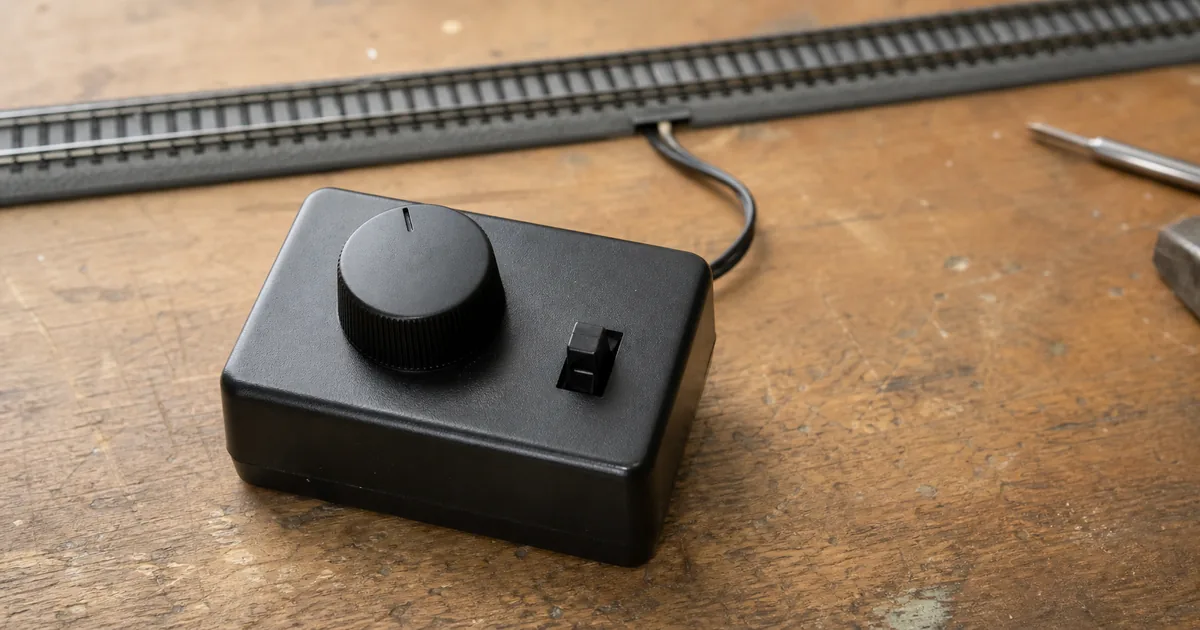
| N-600 (5507) | 0–12 V DC, 1.0 A | No | One D.C. Feeder N output; TCS connector and point-control side connector | Choose when its documented load and non-CL operating job both fit. |
| N-1001-CL (5506) | 0–12 V DC, 1.2 A | Yes | One D.C. Feeder N output; TCS and point-control connections | Adds CL and a different published capacity; still one analogue control output. |
| N-DU101-CL (5517) | Product page lists 1.2 A as planned | Yes | One feeder output; TCS and point-control connections | Choose for the documented one-handle operating interaction, after checking the exact instructions. |
The current N-DU101-CL page still appends “planned” to its 1.2 A figure, so this guide does not silently convert it into a final test result. The exact supplied instruction is the controlling source for a unit in hand.
Operating-job matrix: function before product
| Your requirement | Evidence to demand | Likely branch | Hold condition |
|---|---|---|---|
| One analogue train, no stopped lighting | Simultaneous load within the exact rating; documented adapter and feeder | N-600 may fit | Unknown motor/light current or a required feature absent |
| Compatible lights while stopped | CL power unit plus exact vehicle/light compatibility | N-1001-CL or N-DU101-CL | Only the controller says CL; vehicle evidence missing |
| One-handle power/coast/brake experience | N-DU101-CL instructions and the same load/voltage checks | N-DU101-CL | Buying the handle to solve a capacity or DCC problem |
| Two trains with independent speed | Isolated sections and a separately documented control plan | Not solved by one larger pack | Two live controllers can meet on continuous rails |
| Individually addressed trains | A supported DCC system and vehicle conversion path | Use the DC vs DCC decision guide | Treating CL or TCS as DCC |
Build a simultaneous-load ledger, not a car-count myth
A current rating cannot be translated into a universal number of cars. One unlit trailer is not the same electrical load as an illuminated car; motor designs and condition vary; track-powered accessories may have their own documented paths. Record every device that can draw at the same time, the evidence source, and whether the figure is measured or published.
| Load | Exact item | Published / measured current | Can draw simultaneously? | Evidence |
|---|---|---|---|---|
| Motor vehicle | Catalogue number and powered car | Do not guess | Yes / no | Instruction, maker support or suitable measurement |
| Head / tail light | Exact installed board | Do not infer from brightness | Yes / no | Vehicle or light-unit documentation |
| Interior light | Part number × installed quantity | Per-unit evidence | Yes / no | Optional-parts list / instructions |
| TCS / point equipment | Exact accessory and port | Follow its own rating | Momentary / continuous | Accessory and power-unit instructions |
Controller passport: preserve the configuration that passed
A successful test is hard to reproduce if the controller name is the only thing recorded. Complete one passport for each control district and update its revision whenever the power supply, feeder boundary, governing train or lighting load changes.
| Passport field | Record exactly | HOLD if |
|---|---|---|
| Controller identity | Maker, catalogue number, full name, label or manual revision and source page check date | A seller photo or “TOMIX CL controller” is the only identity. |
| Power source | Supplied or specified adapter, regional mains input, output, polarity and connector from its label and instructions | Compatibility is inferred from a plug that fits. |
| Control district | Feeder location, rail boundaries, gaps, point routes and any switching that prevents controller outputs from meeting | Another live controller can reach the same continuous rails. |
| Governing consist | Exact powered vehicle, formation, head/tail boards, interior-light part numbers and quantity | Motor or light identity is unknown. |
| Simultaneous-load evidence | Each documented or suitably measured load, its source and whether it can draw at the same time | A universal “cars per amp” assumption replaces evidence. |
| Accepted baseline | Direction, low-speed response, CL result where applicable, protection behavior and every exception | The train was only run fast in one direction or an exception has no next test. |
Change trigger: a different adapter, controller, powered car, light board, consist length, district boundary or feeder arrangement invalidates only the affected passport — but it does invalidate it. Re-test before treating the old result as evidence.
Constant lighting is a two-sided compatibility claim
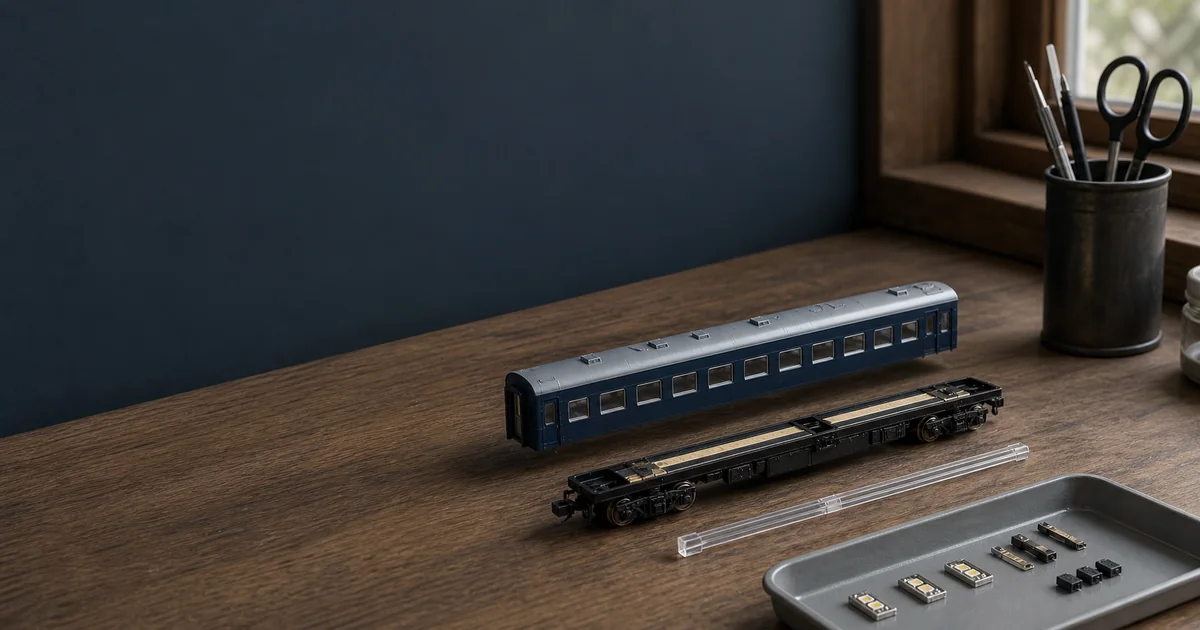
TOMIX's FAQ is precise: stopped lighting needs a vehicle that supports constant lighting and a Power Unit with the CL function. That means “CL” on the controller is necessary for this workflow but not sufficient evidence for every train. Check the exact vehicle instruction and optional-light part. A non-compatible light board does not become compatible because the controller is N-1001-CL or N-DU101-CL.
CL also does not mean DCC. TOMIX's current FAQ states that TOMIX products do not support DCC. If individual locomotive addressing is the destination, use the DCC commissioning guide and treat any unsupported aftermarket conversion as outside TOMIX's published path.
CL acceptance card: prove the stopped-train result
1. Documentary precondition
HOLD until the exact power unit has CL and the exact vehicle or installed light unit is documented as compatible. A lit car and a CL controller are not automatically a supported pair.
2. Smallest controlled test
Use the documented adapter, one CL power unit, one feeder, a clean straight and one known vehicle. Follow that unit's CL adjustment instructions with other loads disconnected.
3. Functional acceptance
GO only if the required stopped lighting is stable enough for your operating goal, the vehicle remains stopped at that setting, and normal starting and direction behavior remain acceptable.
4. Stop or investigate
STOP for odor, heat, abnormal arcing or protection trips. Mark HOLD for premature motion, unstable pickup or a result that changes by direction; clean and isolate one variable before retrying.
This card records a compatibility result for one documented combination. It does not convert that result into a guarantee for every TOMIX vehicle, every third-party light board or a longer formation.
More current is not more independent control
N-600 and N-1001-CL each document one D.C. Feeder N output; N-DU101-CL also lists one feeder output. Adding another feeder from the same throttle may improve distribution on a suitably designed district, but it does not create a second speed command. Two independently operated analogue trains need electrically separated districts and a safe control arrangement.
Six steps to choose and commission the unit
1. Name the operating job
Record whether you need one analogue train, constant lighting at a stop, electric-point or TCS outputs, or a cab-style handle. Do not treat these as one upgrade scale.
2. Verify the exact unit
Match the catalogue number and current product page: N-600 is 5507, N-1001-CL is 5506 and N-DU101-CL is 5517. Use the exact included instructions over a seller title or photograph.
3. Build the simultaneous-load ledger
List every motor, vehicle light and documented track-powered accessory that can draw together. Use maker data or a suitable measurement; do not convert a 1.0 A or 1.2 A rating into a universal car count.
4. Check the complete power chain
Confirm the original adapter, controller, D.C. Feeder N, track and vehicle voltage limits as one documented chain. Constant lighting also requires a compatible vehicle or light unit.
5. Build the smallest powered test
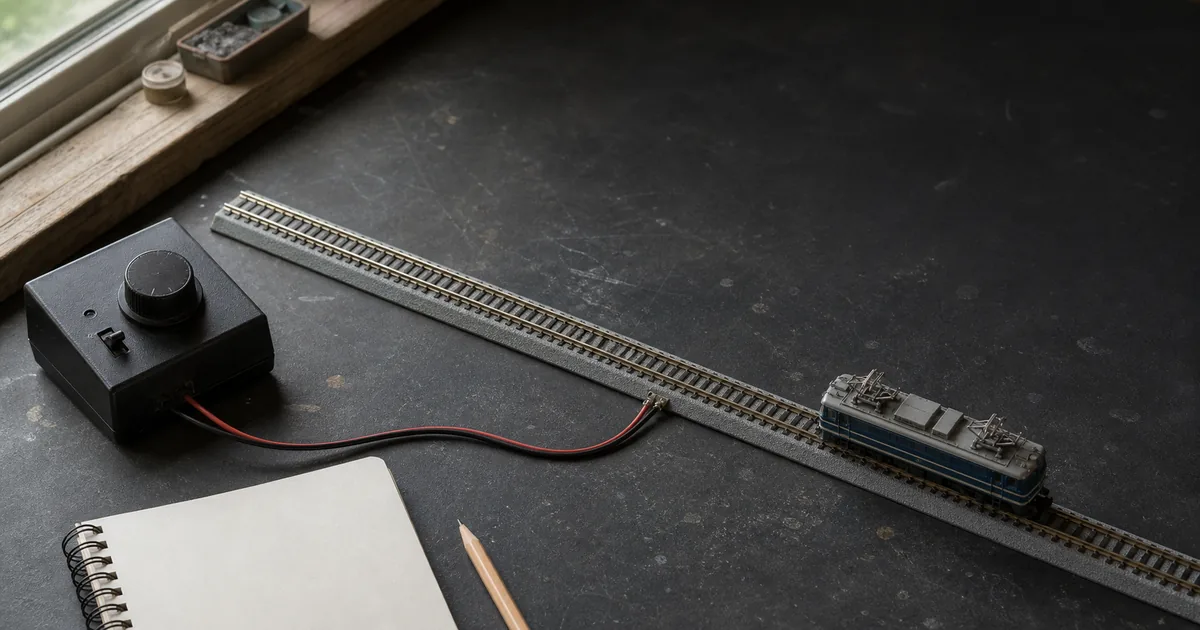
With power off, connect one documented adapter, one controller, one feeder, a short straight and one known-good vehicle. Disconnect other controllers, point boxes and accessory loads.
6. Prove operation before expansion
Start at stop, power on, test direction and low-speed response, then add one documented load at a time. Stop for smoke, odor, abnormal heat, repeated protection trips, damaged cables or behavior outside the instructions.
The adapter and 12 V boundary are not optional details
TOMIX lists N-600 and N-1001-CL track output as 0–12 V DC. Its FAQ warns that running a TOMIX vehicle above DC 12 V can damage the motor or circuit board and may produce heat or fire. Use the exact unit's specified supply; a connector that fits is not evidence of correct voltage, polarity, current capability or regional mains arrangement.
TOMIX's beginner guide says to assemble the track, feeder and vehicle before connecting mains; start with the speed control at STOP and the direction switch centered. It also says to switch off immediately after a derailment because the motor may heat. This guide adds a conservative commissioning rule: begin with the smallest one-train chain, then add only one documented load at a time.
Railway-culture answer: the controller can model a driving ritual
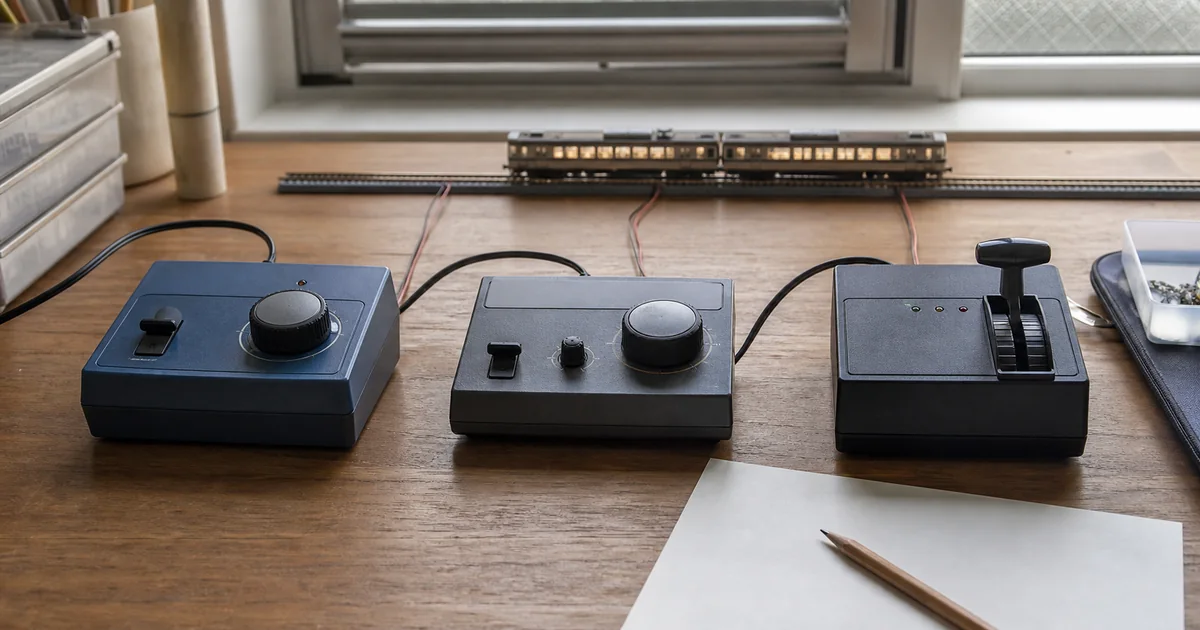
TOMIX's controller range separates electrical supply from the performance of driving. N-DU101-CL arranges three power positions, coast, three brake positions and emergency stop on one handle; N-DU204-CL uses separate master and brake handles, four power and four brake positions, meters and a coasting mode. Those are model-control interpretations, not proof that either reproduces every prototype cab. The useful decision is whether cab-style operation is itself part of the hobby experience you want.
Why notches matter even when the current rating does not change
The handle turns speed control into a sequence of power, coast and brake decisions. Open the note for the model-railway history and its buying implication.
Official and first-party sources
Checked 2026-08-25. Product pages may change; the instruction supplied with the exact unit controls. The acceptance card describes a conservative evidence workflow and is not a TOMIX test standard.
- TOMIX 5507 N-600 — 0–12 V DC, 1.0 A, ports, no CL, included adapter.
- TOMIX 5506 N-1001-CL — 0–12 V DC, 1.2 A, CL and connection details.
- TOMIX 5517 N-DU101-CL — one-handle positions, pulse control, CL and listed output.
- TOMIX 5518 N-DU204-CL — separate handles, positions, meters and coasting mode.
- TOMIX support FAQ — 12 V warning, CL pairing and DCC position.
- TOMIX beginner guide — feeder setup, STOP position and derailment safety.
- TOMIX N-DU101-CL controller brochure — first-party role comparison across N-600, N-1001-CL and cab-style power units.
Compare the whole control path
TOMIX power-unit FAQ
Which TOMIX power unit should I choose?
Choose by operating job. N-600 provides one 0–12 V DC, 1.0 A feeder output plus TCS and point-control connections, without constant lighting. N-1001-CL raises the listed output to 1.2 A and adds constant lighting. N-DU101-CL lists 1.2 A, constant lighting and an eight-position one-handle driving interface. Verify the exact vehicle, light unit and load before choosing.
What does CL mean on a TOMIX power unit?
CL means constant lighting. TOMIX says stationary lighting requires both a CL-equipped power unit and a compatible vehicle or lighting unit. CL does not mean DCC and does not independently address trains.
Is N-DU101-CL more powerful than N-1001-CL?
The current product pages list both at 1.2 A, although the N-DU101-CL page still labels that figure as planned. Its documented distinction is the pulse-controlled, eight-position one-handle interface: three power positions, coast, three brake positions and emergency stop. Do not infer extra electrical capacity from the handle.
Does a 1.2 A power unit make a train faster than 1.0 A?
No such conclusion follows from the current rating. The rating describes available load capacity within the unit's documented voltage and operating limits; speed also depends on voltage, vehicle design, load, track condition and other factors. Do not exceed vehicle instructions.
How many lit cars can N-600 or N-1001-CL run?
There is no safe universal car count. Add the simultaneous current of each motor, head or tail light, interior-light unit and documented accessory, then compare that evidence with the exact power-unit rating. Vehicle and lighting instructions take priority.
Does constant lighting work with every TOMIX vehicle?
No. TOMIX's FAQ says the vehicle must support constant lighting and the power unit must have the CL function. Check the exact vehicle instruction and optional-parts list rather than assuming every installed light is compatible.
Can one TOMIX power unit control two trains independently?
Not through its single feeder output. More feeders from one throttle remain one control district. Independent analogue operation requires electrically isolated sections and a separately documented controller arrangement; never connect two powered controllers to one continuous rail section.
Does TCS or CL mean TOMIX supports DCC?
No. TOMIX's current FAQ states that TOMIX products do not support DCC. TCS peripheral outputs and constant lighting are analogue-system functions, not locomotive addressing.
Can I use a non-TOMIX adapter with the power unit?
Do not substitute a supply merely because its plug fits. Use the adapter and input arrangement specified for the exact unit and region. Voltage, polarity, current capability and connector appearance are separate facts, and an unverified supply can damage equipment.
What should be connected for the first test?
Use one documented adapter, one power unit, one D.C. Feeder N, a short straight track and one known-good vehicle. Begin with the throttle at stop and other controllers, point boxes and accessories disconnected.
What warning signs mean I should stop immediately?
Return the throttle to stop, switch off and unplug for smoke, burning odor, abnormal heat, liquid in electrical equipment, damaged cables or casing, sustained abnormal arcing, or repeated protection trips. Do not retry until the cause is safely identified under the applicable instructions.
Is the one-handle controller only a cosmetic upgrade?
No. N-DU101-CL documents a different operating interface with power, coast, brake and emergency-stop positions. That changes the driving interaction, but the product page does not make it DCC or prove more load capacity than N-1001-CL.