The four-gate compatibility test
| Gate | PASS evidence | HOLD condition | Why it matters |
|---|---|---|---|
| 1. Vehicle | Current maker page, instruction or parts list names the exact vehicle and light | Only train name, scale, photo or seller copy | Different production versions can use different interiors and pickup systems. |
| 2. Interface | Board, guide, pickup shoe/spring and any filter are documented | A part looks similar or fits only with undocumented cutting | N scale does not define the lighting interface. |
| 3. Control | Exact vehicle/light and controller support the desired stopped-light behaviour | Assuming LED or PWM automatically means constant lighting | Controller and vehicle compatibility are two separate claims. |
| 4. Operation | One reassembled car passes low-speed, curve, turnout, heat and flicker checks | Bench illumination only | A board can light while the body, pickup or running clearance still fails. |
KATO and TOMIX product evidence
| Family | Colour / pack | What the cited page says | Boundary |
|---|---|---|---|
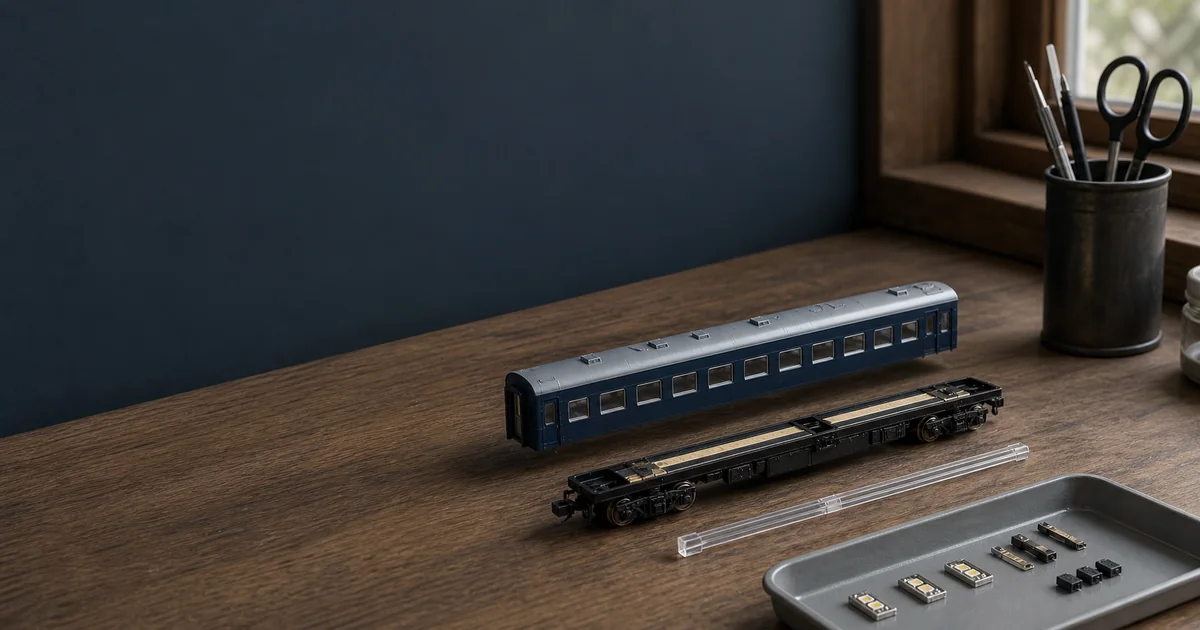
| KATO 11-211 / 11-212 | White; one / six cars | Light guide, pickup shoe, assembled unit and colour filter per car; no soldering or adhesive | Exact KATO vehicle page still controls fit. |
| KATO 11-213 / 11-214 | Warm-white; one / six cars | Same listed component pattern; warm-white intended to reproduce an incandescent impression | Do not infer compatibility from colour or brand alone. |
| TOMIX 0733 / 0737 | White; one / six units | LC size, about 25 mA, fluorescent-light impression | Pickup shoe and spring are not included; older pickup systems may need separate parts. |
| TOMIX 0734 / 0738 | Warm-white; one / six units | LC size, about 25 mA, warm-white output | Pickup shoe and spring are not included. |
This is not a brand ranking. KATO's included pickup shoe can reduce one purchasing uncertainty, while TOMIX's product pages expose a useful current figure. Neither fact replaces the exact vehicle's optional-parts list. For TOMIX, the support FAQ explicitly directs owners to the applicable vehicle instructions when choosing optional parts.
White or warm-white is a prototype question
KATO describes its white unit as reproducing modern and indirect-lighting effects and its warm-white unit as suitable for incandescent-lit older coaches; the included filter can create other impressions on named KATO examples. TOMIX describes 0733/0737 for fluorescent-lit trains and 0734/0738 as warm-white. These are product descriptions, not a universal year-by-year railway rule.
Use three sources in order: the exact vehicle's recommended option, dated prototype photographs, then a one-car sample under the controller you actually use. Body tint, glazing, interior plastic and the light guide alter the result. Camera white balance can also make an online photograph look warmer or cooler than the model does in person.
Railway-culture answer: interior-light colour can communicate a train's service era and atmosphere as strongly as livery. KATO's own page distinguishes white, warm-white and filter-assisted indirect-light impressions. Treat that as a modelling palette, then use the prototype and exact model documentation rather than a blanket “old equals amber” rule.
A night train is not one colour temperature
Open the note to translate KATO's documented lighting options into a restrained era-and-service decision.
Stopped lighting: prove both sides
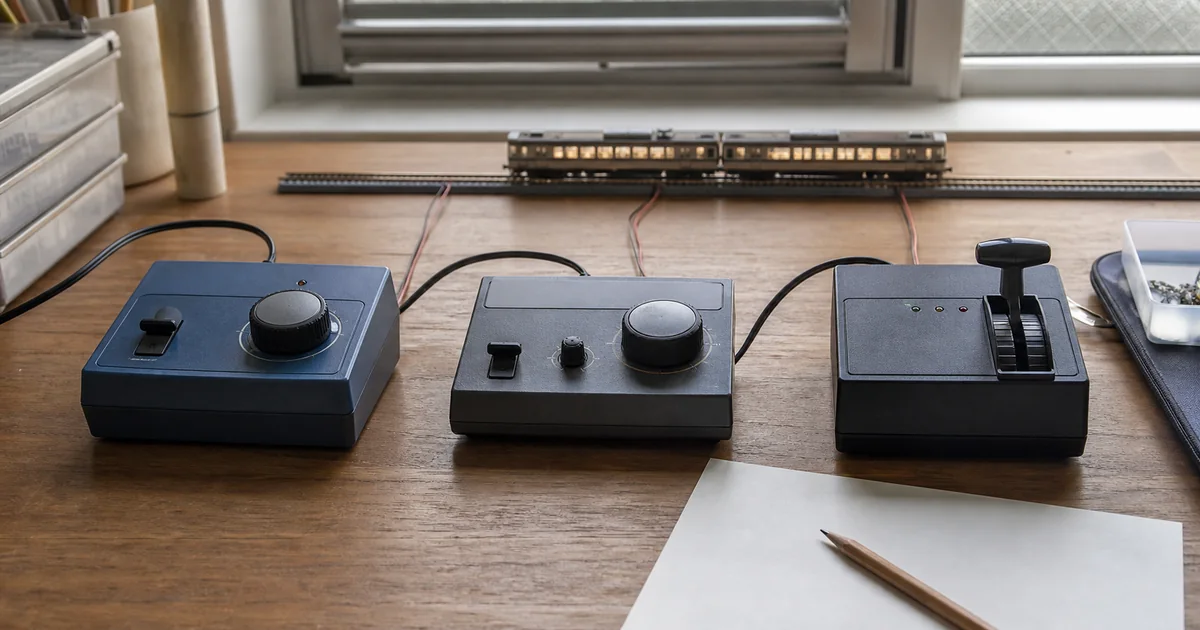
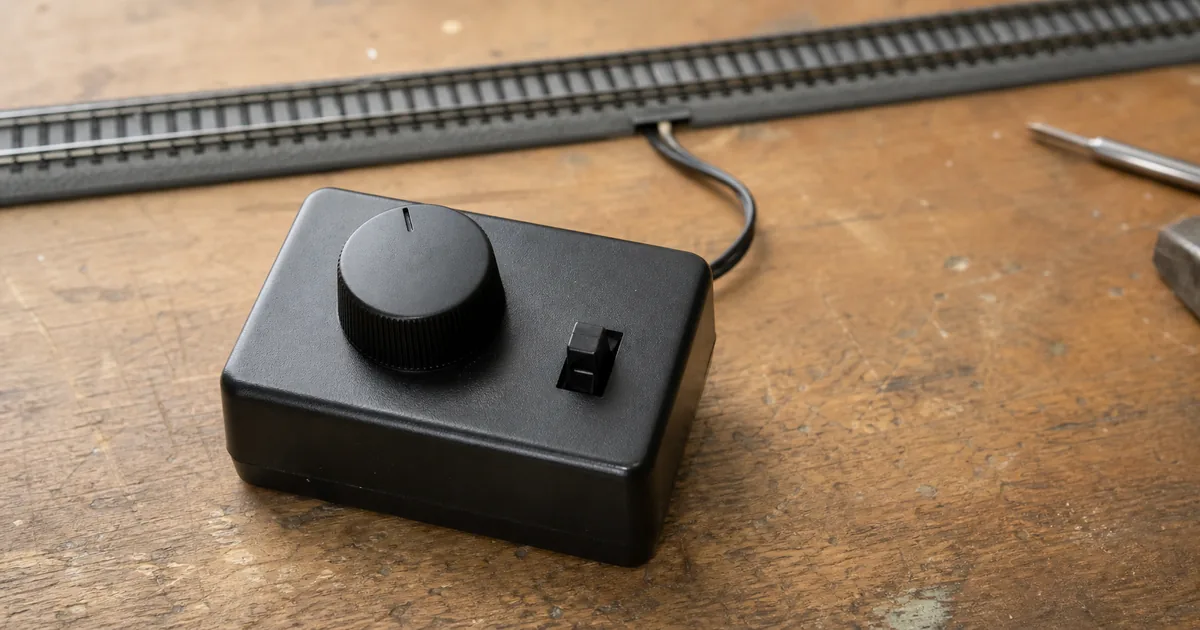
TOMIX's support FAQ is precise: a constant-lighting-compatible vehicle needs a TOMIX Power Unit with the CL function, such as N-1001-CL, to remain lit while stopped. Therefore “the unit is LED” is not enough, and a CL controller is not enough when vehicle-side compatibility is missing. Use the TOMIX Power Unit guide to check the controller side.
KATO publishes a different boundary. Its Standard SX page says PWM control can illuminate lights from a stop depending on the vehicle. That qualifier matters. It does not prove every KATO light or vehicle works identically, and it says nothing about an undocumented cross-brand controller combination. Compare the complete power chain in the KATO power-pack guide.
Build a simultaneous-load ledger
TOMIX publishes about 25 mA for each cited LC LED unit. That supports arithmetic for those units only: six are about 150 mA, ten about 250 mA and sixteen about 400 mA for interior lighting. It does not include the motor, head and tail lights, other lit vehicles or any other simultaneous track load. KATO's cited lighting page does not publish the same 25 mA value, so do not transfer it.
| Load | Exact item | Quantity | Per-item evidence | Simultaneous total |
|---|---|---|---|---|
| Interior lights | Part number and vehicle | Installed cars | Maker page or instruction | Quantity × supported figure |
| Motor car | Exact powered vehicle | 1 or more | Instruction or suitable measurement | Do not guess from scale |
| Head / tail lights | Exact installed boards | Lit ends | Vehicle documentation | Add when lit together |
| Other track loads | Named accessory | Active items | Its own instructions | Keep separate if not on track output |
Six steps from evidence to one-car proof
1. Identify the exact vehicle and car
Record the maker, complete set or vehicle number, car designation and production version. A train name, scale or body photograph is not enough evidence for the lighting interface.
2. Find the maker-specified light
Use the exact vehicle product page, instruction or optional-parts list to name the lighting part and any pickup shoe, spring, filter or vehicle-specific exception. If the evidence is missing, hold the purchase.
3. Choose colour from prototype evidence
Start with the maker's documented white or warm option, then compare period photographs and the actual car interior. Treat colour as a prototype decision, not a rule that every old train is warm and every modern train is white.
4. Build one car without irreversible changes
Remove the vehicle from powered track, photograph the original arrangement and test-fit one light. Do not cut, file or glue unless the exact vehicle instruction requires it.
5. Run the one-car acceptance gate
Reassemble the car and test straight track, both directions, curves and turnouts at low speed. Check body closure, clearance, evenness, stopped-light behaviour, heat and flicker before buying more units.
6. Scale the load and document the result
Multiply only a maker-published per-unit current by installed quantity, then add the motor and other simultaneous loads. Record the successful vehicle, part, pickup parts, controller and test conditions before expanding the formation.
Diagnose flicker with a two-cross-test matrix
| Problem car on known-good straight | Known-good lit car at suspect location | Strongest first hypothesis | Next controlled check |
|---|---|---|---|
| Fails | Passes | Problem-car pickup, contacts or light | Clean only as documented; inspect pickup alignment; then swap one known-good light if compatible. |
| Passes | Fails | Location, rail, joiner, turnout or feeder | Inspect and test that location without changing the car. |
| Passes | Passes | Intermittent or car-by-location interaction | Repeat the exact speed, direction, curve and load. |
| Fails | Fails | Common system issue or multiple faults | Reduce to one controller, one feeder and a short clean straight. |
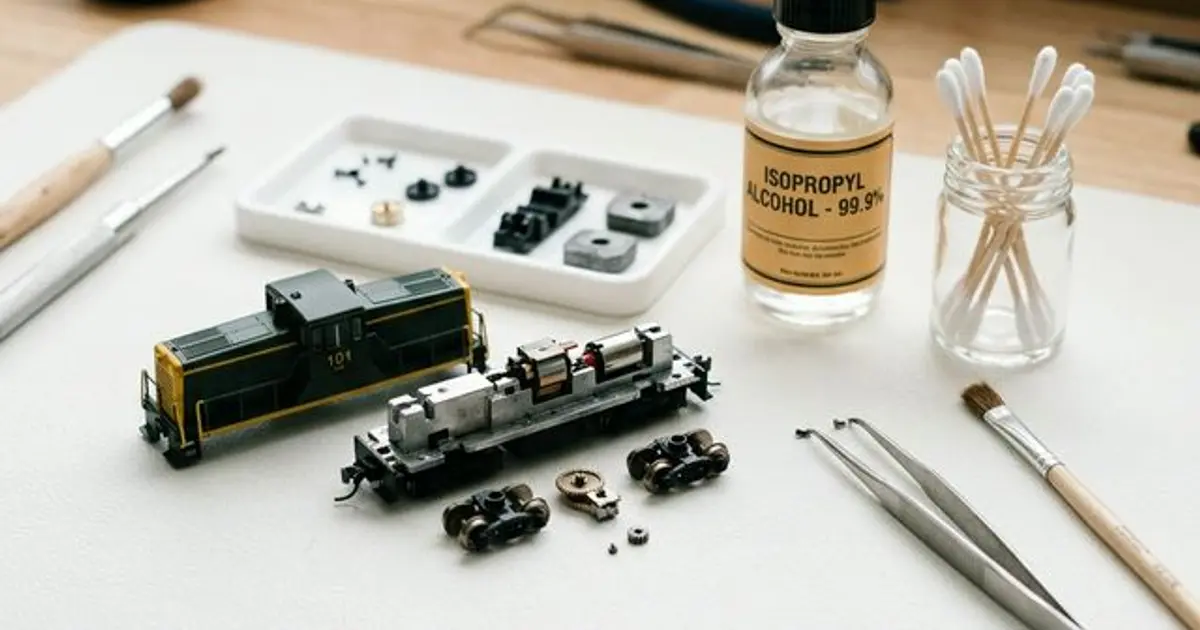
The matrix narrows the strongest hypothesis; it does not prove one cause. For safe cleaning boundaries see the maintenance guide, and for the broader method use the N scale troubleshooting guide.
Stop conditions and irreversible work
Remove the vehicle from powered track before opening it and work over a parts tray. Photograph the original pickup and spring arrangement. TOMIX's LC pages say a spring may be shortened for installation in a powered car, but this is not permission to cut every spring: follow the exact vehicle and part instructions.
Stop and switch off for smoke, burning odor, abnormal heat, repeated protection trips, pinched wiring, sustained abnormal arcing, binding or a body that no longer closes normally. Do not keep trimming until an undocumented part fits. Preserve original parts until the one-car gate passes.
Official and first-party sources
Checked 2026-08-13. Product pages, prices and specifications can change; the instructions supplied with the exact vehicle and light control.
- KATO LED Interior Light Clear — 11-211 to 11-214, pack contents, colours and no-solder/no-adhesive statement.
- KATO Standard SX — PWM and vehicle-dependent lighting from a stop.
- TOMIX 0733 LC white — single white unit, about 25 mA and excluded pickup parts.
- TOMIX 0734 LC warm-white — single warm-white unit, about 25 mA and excluded pickup parts.
- TOMIX 0737 LC white set — six white units and older-pickup warning.
- TOMIX 0738 LC warm-white set — six warm-white units and pack contents.
- TOMYTEC support FAQ — exact optional-parts instructions and the vehicle-plus-CL-controller condition.
- TOMIX reference appendix — lighting-family correspondence and published LED interior-light current.
Complete the lighting power chain
N scale interior-light FAQ
Can KATO interior lighting fit directly in a TOMIX coach?
Do not assume it can. N scale and 9 mm gauge do not define the lighting board, light guide, pickup interface or roof clearance. Use the exact vehicle instruction and maker-specified option. If no approved cross-brand path is documented, treat the fit as unresolved rather than compatible.
What is the difference between KATO 11-211, 11-212, 11-213 and 11-214?
KATO lists 11-211 as one white unit, 11-212 as six white units, 11-213 as one warm-white unit and 11-214 as six warm-white units. The product page lists a light guide, pickup shoe, assembled light unit and colour filter per car, and says installation needs no soldering or adhesive. The exact vehicle page still controls compatibility.
What is the difference between TOMIX 0733, 0734, 0737 and 0738?
TOMIX lists 0733 as one white LC unit, 0734 as one warm-white LC unit, 0737 as six white LC units and 0738 as six warm-white LC units. Their pages list about 25 mA per unit and say the pickup shoe and pickup spring are not included. Check the exact vehicle's optional-parts list before ordering.
Should I choose white or warm-white interior lighting?
Use the exact vehicle recommendation and prototype evidence. KATO describes its white and warm-white products for different lighting impressions, while TOMIX calls 0733 and 0737 suitable for fluorescent-lit trains and 0734 and 0738 warm-white. Body tint, interior colour and controller behaviour can change the final appearance, so test one car first.
Do TOMIX interior lights stay on when the train stops?
Only when both sides of the requirement are met. TOMIX says a constant-lighting-compatible vehicle or light needs a Power Unit with the CL function, such as N-1001-CL, to remain lit while stopped. An ordinary controller or the fact that the source is an LED is not sufficient evidence.
Do KATO interior lights stay on while stopped?
It depends on the exact vehicle and controller. KATO says Standard SX uses PWM and can illuminate lights from a stop depending on the vehicle. That is not a promise for every KATO light, vehicle or non-KATO controller; verify the complete documented combination.
Do I have to shorten a TOMIX pickup spring?
Only when the instruction for the exact vehicle and lighting part requires it. TOMIX's LC pages mention shortening the spring for installation in a powered car, but cutting is irreversible. Test-fit first and follow the vehicle-specific instruction rather than copying another model's modification.
How many interior lights should I buy first?
Buy one documented unit first. Prove fit, body closure, colour, brightness, stopped-light behaviour and reliable pickup in one exact car before buying a multi-pack. A lower per-unit pack cost does not recover a wrong interface or unsuitable colour.
Does flicker mean the lighting board is faulty?
Not by itself. If multiple cars flicker at one location, the location, rail or feed is the stronger hypothesis. If one car flickers everywhere, that car's wheel, pickup and contact path is the stronger hypothesis. Swap one known-good car or light at a time; the cross-test narrows the cause but does not prove it alone.
How much current do ten TOMIX LC lights use?
Using TOMIX's published figure of about 25 mA per LED interior-light unit, ten units are about 250 mA for interior lighting alone. Add the motor, head and tail lights and any other simultaneous track load. Do not apply the 25 mA figure to KATO units because KATO does not publish that same value on the cited page.
Can a controller's amp rating be divided by 25 mA to get a safe car count?
No. The formation also includes motor and other lighting loads, operating current can vary, and voltage, wiring, vehicle and controller limits still apply. Use a simultaneous-load ledger and the exact instructions; a current rating is not a universal illuminated-car count.
When should I stop an interior-light installation?
Stop and switch off for smoke, burning odor, abnormal heat, repeated protection trips, pinched wires, a body that will not close normally, binding or sustained abnormal arcing. Do not keep testing an irreversible modification or undocumented cross-brand fit; return to the exact instructions or maker support.